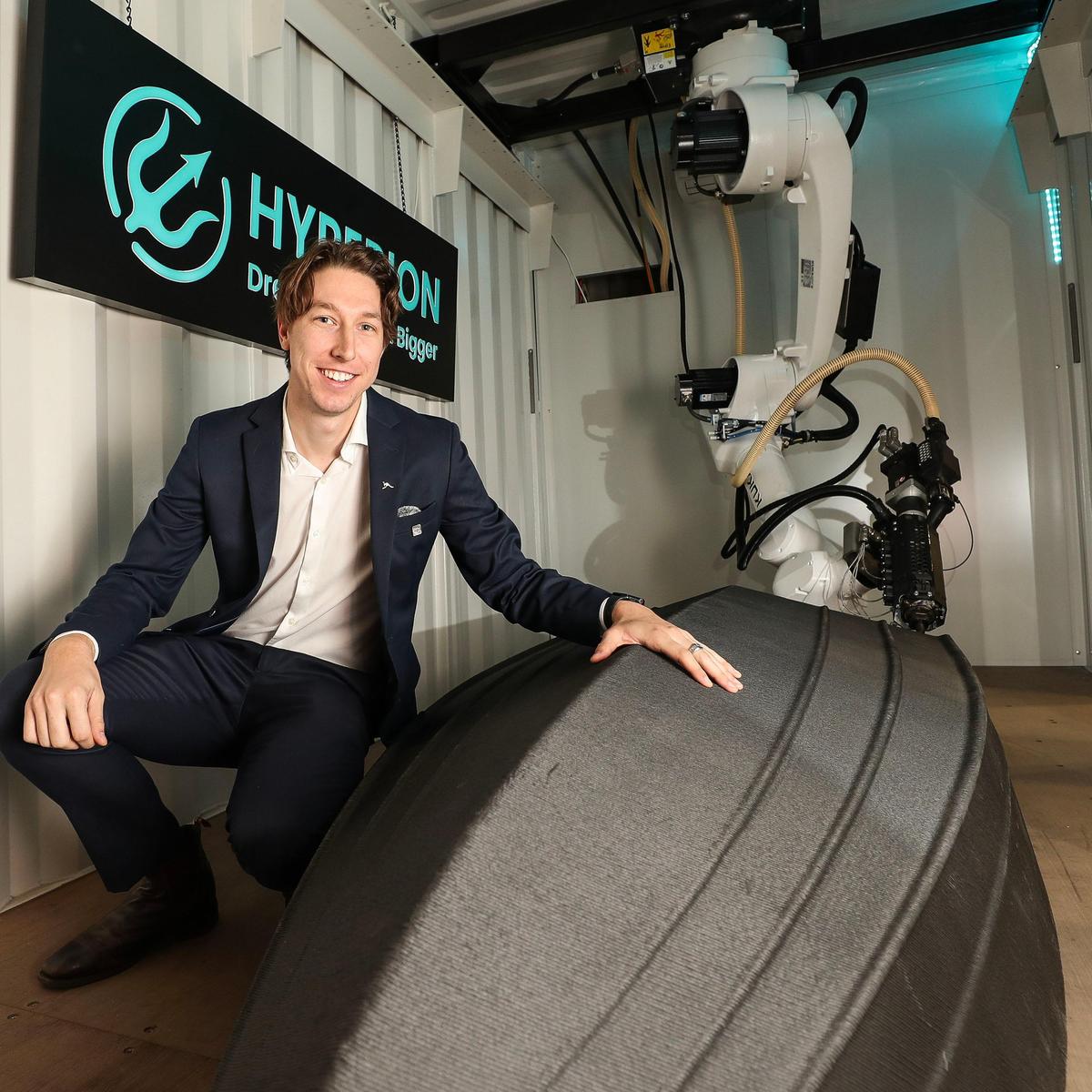
Inspire Robotics and Hyperion Systems have signed an agreement to deploy a pioneering containerised advanced manufacturing system in Timor-Leste. This system will integrate artificial intelligence, robotics, and recycled plastics, aiming to promote sustainable local industries, restore coastal environments, assist monitoring of illegal fishing, and empower community-driven entrepreneurship.
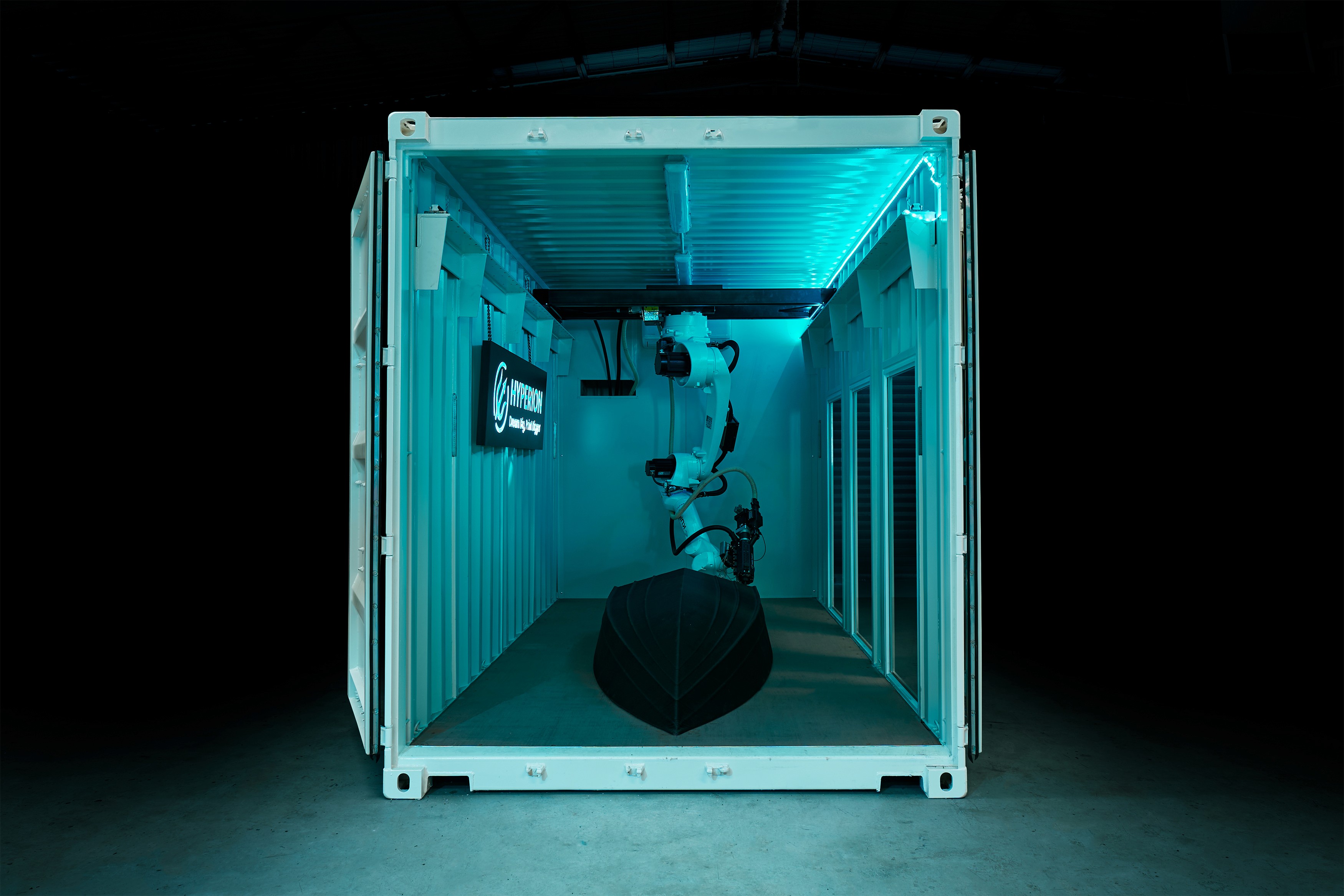
Central to the collaboration is Hyperion Systems’ TitanCell — a deployable large-format additive manufacturing (LFAM) platform capable of transforming locally sourced plastic waste into high-value products and infrastructure directly within regional communities. In doing so, the project directly supports Timor-Leste President José Ramos-Horta’s vision for TimorLeste to become a “plastic-free” and “carbon-free” nation and aligns with the ASEAN Regional Action Plan for Combating Marine Debris.
During the 2026 World Economic Forum, President Ramos-Horta highlighted plastic pollution as a systemic global challenge that disproportionately impacts developing nations and called for international partnerships capable of delivering practical solutions and long-term capability building.
Inspire Robotics Founder Dr. Theodore Blackmon said the President’s call to action had motivated his organisation to demonstrate how advanced technologies could now be deployed directly into communities to create economic opportunities while addressing environmental challenges.
“This ASEAN initiative focuses on reducing plastic pollution and encouraging circular economy practices. This project will help Timor-Leste play a leading role in its roll-out addressing the worldwide plastic pollution crisis with tangible results that can be demonstrated by 2029 when Timor-Leste hosts the ASEAN Summit for the first time,” Dr Blackmon said.
“We believe the future of innovation is not concentrated in major cities or large corporations — it is distributed into communities. This is about turning local problems into local opportunities. Plastic waste becomes manufacturing feedstock. Robotics becomes a tool for empowerment. AI becomes a platform for education, entrepreneurship and regeneration.”
Developed in Western Australia, the TitanCell is a portable "Factory-in-a-Box" that integrates industrial robotics, large-scale 3D printing, and proprietary recycled polymer technology into a containerised system, enabling rapid deployment in any location worldwide. By transforming plastic waste into valuable manufacturing feedstock, this technology empowers communities to locally produce large structural components, diminishing dependence on imported materials, bolstering supply chain resilience, and fostering sustainable economic opportunities.
The TitanCell can manufacture products such as modular housing components, pontoons, marine infrastructure, culverts, and hulls for both autonomous and crewed vessels using difficult-to-recycle plastics recovered from coastal environments and industrial waste streams.
Under the agreement, a Hyperion TitanCell will be deployed and commissioned in Timor-Leste later this year as part of Inspire Robotics’ “Business-in-a-Box” platform, which supports local entrepreneurs to establish circular and regenerative businesses.
The first phase of the deployment will focus on producing boats and marine equipment to support marine surveillance for illegal fishing, mangrove restoration projects, coastal clean-up activities and plastic recovery operations along the Timor-Leste coastline.
Inspire Robotics is a vision-to-software and systems integration company empowering entrepreneurs to co-create and launch locally owned sustainable businesses to address environmental and social challenges. The Inspire Robotics gamification platform leverages Digital Twin technology to connect individuals, businesses, and governments across the globe in a race to help save our planet.
Dr Blackmon, who began his career developing robotic software technologies for NASA’s Telerobotics Program and participated in Mission Control operations to drive the first rover on Mars, said the partnership represented a new model for combining frontier technology with grassroots economic development.
He stated, “For decades, advanced robotics and digital manufacturing have been confined to highly specialised industries and major industrial economies.”
“What Hyperion has developed fundamentally changes that equation. The TitanCell enables advanced manufacturing to be deployed directly within communities that have historically lacked industrial infrastructure, creating a pathway to leapfrog emerging economies into industrial-scale and AI-enabled manufacturing. Together, Inspire Robotics and Hyperion Systems are creating a blueprint for distributed circular economies powered by local entrepreneurs.”
Dr Blackmon said a future phase for Inspire Robotics will be establishing a similar project with an Australian indigenous community. More information on the project will be available later this year.
Hyperion CEO Josh Wigley said the partnership demonstrated how Australian sovereign manufacturing capability and innovation could help solve global environmental and economic challenges.
“The TitanCell was designed to fundamentally rethink manufacturing by taking advanced production capability directly to the point of need,” Mr Wigley said.
“We are turning plastic waste into valuable infrastructure and products while enabling communities to manufacture locally, create skilled jobs and build long-term economic resilience. Timor-Leste is only the beginning. We see enormous potential for deployable circular manufacturing systems to support remote communities, island nations, disaster recovery operations and emerging economies globally.”
Hyperion Systems co-founders Josh Wigley and David Budge established the company to reduce plastic waste, clean up the world’s oceans and rebuild sovereign manufacturing capability using advanced robotics and recycled materials.
Commercialisation of the TitanCell has been accelerated through a $385,000 matched funding grant under the Australian Government’s Industry Growth Program, supporting the transition of Australian innovation into export-ready advanced manufacturing capability.
About Hyperion Systems
Hyperion Systems is a Western Australia-based advanced manufacturing company specialising in large-format additive manufacturing, robotics and deployable production systems for maritime, defence and infrastructure applications. Through containerised manufacturing systems and advanced composite materials, the company is developing distributed sovereign manufacturing capability for Australian and international markets.
About Inspire Robotics
Inspire Robotics is a global entrepreneurship platform that harnesses AI, robotics, and collaborative learning to empower young people and communities in developing locally owned ventures that tackle environmental and social challenges. https://inspire-robotics.com/