Industries
Applications

Autonomous Maritime Systems
APPLICATIONS
Large-format vessel manufacturing, platform development and deployable production systems for uncrewed maritime applications.
Autonomous Maritime Systems
APPLICATIONS
Large-format vessel manufacturing, platform development and deployable production systems for uncrewed maritime applications.
Why Hyperion for autonomous maritime systems
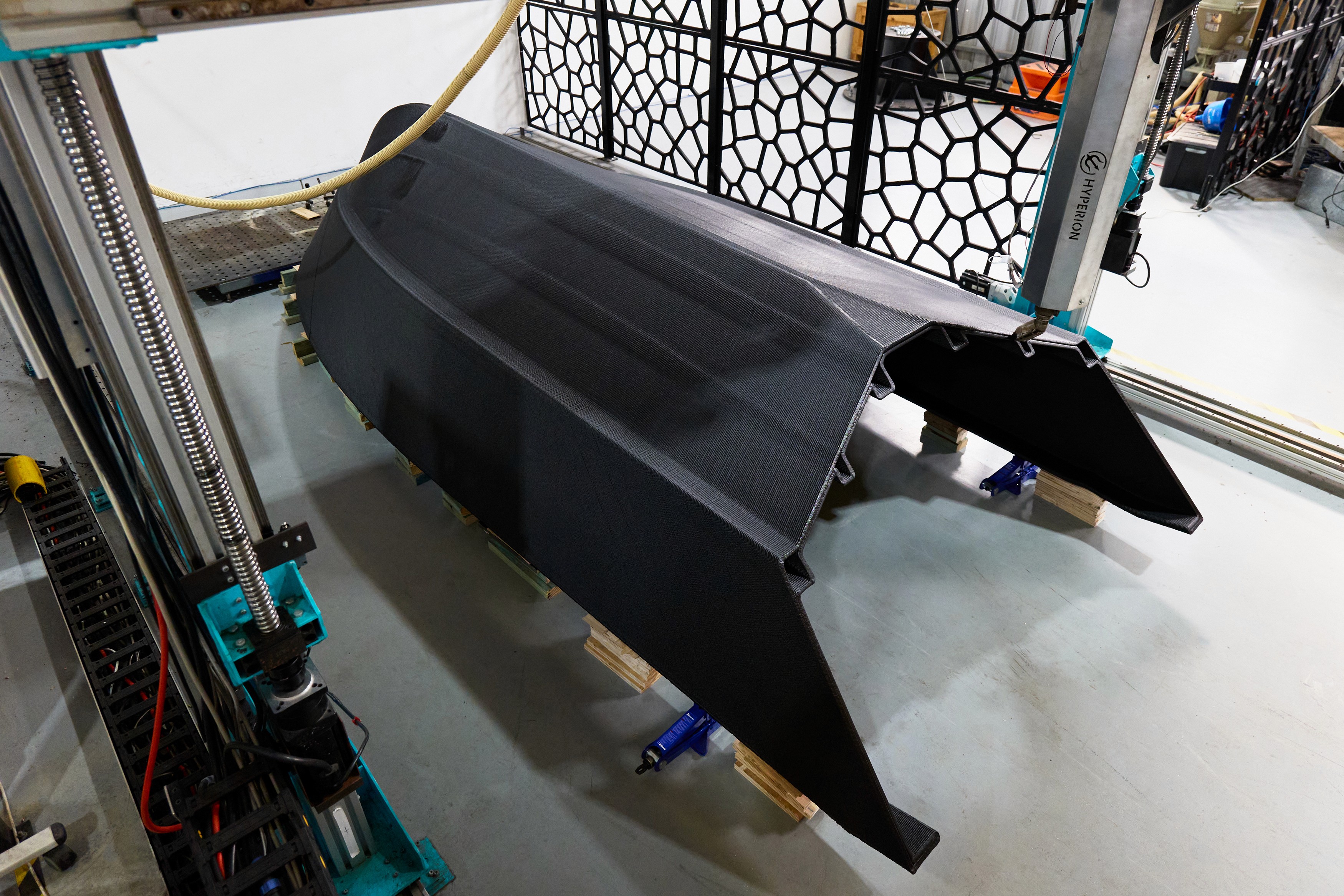
Hyperion manufactures reinforced polymer hulls and components using large-format robotic additive manufacturing. We support maritime programmes through vessel production, platform development and manufacturing systems for customers building their own production capability.
01 /
Large-format hull and component manufacturing
02 /
Reinforced polymer materials
03 /
Robotic printing, machining and finishing
04 /
Platform development with integration partners
05 /
Containerised production system options
06 /
Australian engineering and manufacturing
Why Hyperion for autonomous maritime systems
Hyperion manufactures reinforced polymer hulls and components using large-format robotic additive manufacturing. We support maritime programmes through vessel production, platform development and manufacturing systems for customers building their own production capability.
01 /
Large-format hull and component manufacturing
02 /
Reinforced polymer materials
03 /
Robotic printing, machining and finishing
04 /
Platform development with integration partners
05 /
Containerised production system options
06 /
Australian engineering and manufacturing
Why Hyperion for autonomous maritime systems
Hyperion manufactures reinforced polymer hulls and components using large-format robotic additive manufacturing. We support maritime programmes through vessel production, platform development and manufacturing systems for customers building their own production capability.
01 /
Large-format hull and component manufacturing
02 /
Reinforced polymer materials
03 /
Robotic printing, machining and finishing
04 /
Platform development with integration partners
05 /
Containerised production system options
06 /
Australian engineering and manufacturing
ASTRA 460
ASTRA 460
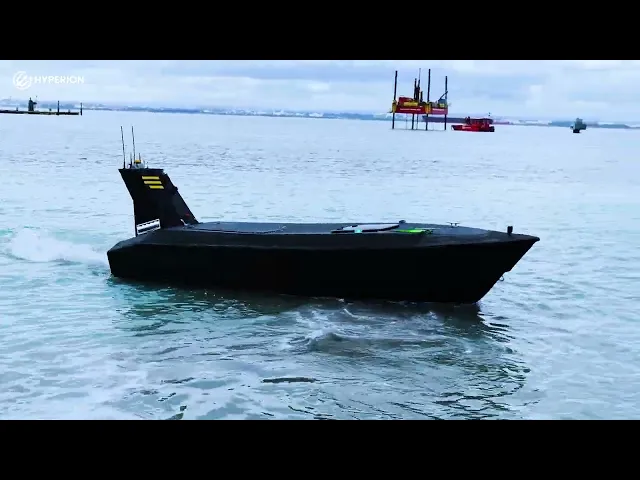
ASTRA 460 is the first vessel configuration within Hyperion’s ASTRA Platform, combining a 3D-printed hull with integrated marine systems. The platform is being developed to accommodate different propulsion systems and levels of autonomy to suit operational requirements.
ASTRA 460
ASTRA 460 is the first vessel configuration within Hyperion’s ASTRA Platform, combining a 3D-printed hull with integrated marine systems. The platform is being developed to accommodate different propulsion systems and levels of autonomy to suit operational requirements.

SPECIFICATIONS
Hull Length
4.6 m
Hull material
HDPE + GF
hull print cycle
Approx. 40 hours
Demonstrated speed
40 kn
The Challenge
Conventional tooling, supplier lead times and freight can constrain vessel development and replacement-part supply. Changes to hull geometry, equipment interfaces or operational requirements can introduce further cost and delay, particularly when manufacturing is far from the operator.
The Challenge
Conventional tooling, supplier lead times and freight can constrain vessel development and replacement-part supply. Changes to hull geometry, equipment interfaces or operational requirements can introduce further cost and delay, particularly when manufacturing is far from the operator.
The Solution
Hyperion positions production capability closer to the point of need, reducing dependence on distant suppliers, long lead times and fixed tooling so autonomous platforms can be built, adapted and iterated at operational pace.
Faster production timeframes
Large-format additive manufacturing can reduce vessel hull production from weeks or months to days, supporting faster prototyping, iteration and deployment.
Deployable manufacturing capability
Containerised production systems designed for regional, remote and operational environments.
Operator training and deployment support
Training and handover support for operators, supporting safe deployment, system familiarisation and operational readiness.
Reduced logistics dependency
Manufacturing capability positioned closer to where systems are needed.
Flexible production and iteration
Rapid design updates and modular manufacturing workflows supporting evolving operational requirements.
Faster production timeframes
Large-format additive manufacturing supports faster prototyping, iteration and deployment of hulls and platform components, compressing the cycle between design change and a system that is ready to deploy.
The Solution
Hyperion positions production capability closer to the point of need, reducing dependence on distant suppliers, long lead times and fixed tooling so autonomous platforms can be built, adapted and iterated at operational pace.
Faster production timeframes
Large-format additive manufacturing can reduce vessel hull production from weeks or months to days, supporting faster prototyping, iteration and deployment.
Deployable manufacturing capability
Containerised production systems designed for regional, remote and operational environments.
Operator training and deployment support
Training and handover support for operators, supporting safe deployment, system familiarisation and operational readiness.
Reduced logistics dependency
Manufacturing capability positioned closer to where systems are needed.
Flexible production and iteration
Rapid design updates and modular manufacturing workflows supporting evolving operational requirements.
Faster production timeframes
Large-format additive manufacturing supports faster prototyping, iteration and deployment of hulls and platform components, compressing the cycle between design change and a system that is ready to deploy.
The Solution
Hyperion positions production capability closer to the point of need, reducing dependence on distant suppliers, long lead times and fixed tooling so autonomous platforms can be built, adapted and iterated at operational pace.
Faster production timeframes
Large-format additive manufacturing can reduce vessel hull production from weeks or months to days, supporting faster prototyping, iteration and deployment.
Deployable manufacturing capability
Containerised production systems designed for regional, remote and operational environments.
Operator training and deployment support
Training and handover support for operators, supporting safe deployment, system familiarisation and operational readiness.
Reduced logistics dependency
Manufacturing capability positioned closer to where systems are needed.
Flexible production and iteration
Rapid design updates and modular manufacturing workflows supporting evolving operational requirements.
Faster production timeframes
Large-format additive manufacturing supports faster prototyping, iteration and deployment of hulls and platform components, compressing the cycle between design change and a system that is ready to deploy.

Application pathways
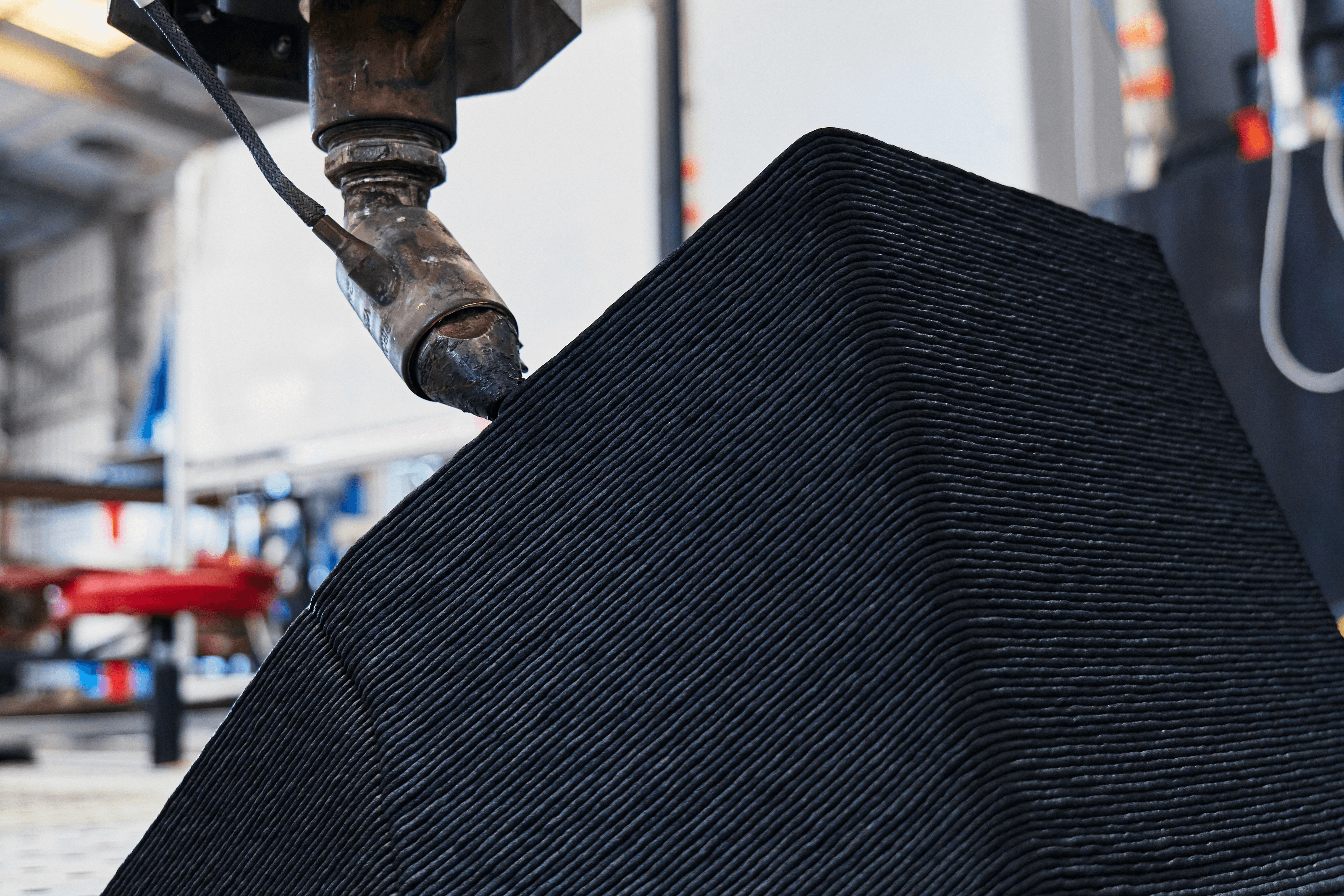
Application pathways and production outputs for uncrewed vessels, payload structures, prototype platforms, and mission-specific maritime systems.
Applications
01 /
Uncrewed Surface Vessel (USV) hulls
02 /
Maritime surveillance platforms
03 /
Autonomous inspection systems
04 /
Modular payload structures
05 /
Rapid prototyping and testing
06 /
Maritime security and ISR applications
07 /
Mission-specific vessel configurations
Outputs
01 /
Large-format vessel hulls
02 /
Process window development and optimisation
03 /
Structural maritime components
04 /
Modular payload housings
05 /
Prototype autonomous platforms
06 /
Custom tooling and fixtures
07 /
Deployable operational components
08 /
Marine infrastructure systems
Application pathways
Application pathways and production outputs for uncrewed vessels, payload structures, prototype platforms, and mission-specific maritime systems.
Applications
01 /
Uncrewed Surface Vessel (USV) hulls
02 /
Maritime surveillance platforms
03 /
Autonomous inspection systems
04 /
Modular payload structures
05 /
Rapid prototyping and testing
06 /
Maritime security and ISR applications
07 /
Mission-specific vessel configurations
Outputs
01 /
Large-format vessel hulls
02 /
Process window development and optimisation
03 /
Structural maritime components
04 /
Modular payload housings
05 /
Prototype autonomous platforms
06 /
Custom tooling and fixtures
07 /
Deployable operational components
08 /
Marine infrastructure systems
FREQUENTLY ASKED QUESTIONS
Common questions about manufacturing for autonomous maritime systems
For teams building and iterating USVs and mission-specific maritime platforms.
Q1.
What is an Uncrewed Surface Vessel (USV)?
Hyperion uses large-format additive manufacturing to produce marine and coastal infrastructure — floating walkways, pontoons, structural components and access systems — in engineered polymer and recycled materials selected to withstand salt, moisture and constant exposure. Producing closer to the point of deployment reduces the freight and lead-time burden that constrains marine projects.
Q2.
How is 3D printing used for USV hulls and components?
Hyperion produces USV hulls, structural components and platform parts using large-format robotic manufacturing. Because parts are produced directly from digital design, platforms can be built, adapted and iterated at operational pace rather than waiting on external tooling and supply chains.
Q3.
How does deployable manufacturing support defence maritime capability?
Positioning production closer to operations means parts and platforms can be produced near the point of need rather than shipped from distant facilities, reducing reliance on freight and long supply chains and protecting operational readiness. See Deployable Production Systems and the Defence industry page.
Q4.
How quickly can Hyperion iterate USV designs for mission-specific platforms?
Modular workflows and rapid design updates let a platform be revised in response to changing requirements without re-tooling through external suppliers, which is what makes iterating in the field practical rather than slow and costly.
Q5.
What materials are used for autonomous maritime platforms?
Engineering-grade polymers and, for structural metal parts, WAAM. Materials are qualified through testing and validation before parts enter service. See Polymers, Metals and Testing and Validation.
Q6.
Does Hyperion provide support after deployment?Does Hyperion provide operator training and deployment support?
Yes — training and handover support is provided to support safe deployment, system familiarisation and operational readiness.
FREQUENTLY ASKED QUESTIONS
Common questions about manufacturing for autonomous maritime systems
For teams building and iterating USVs and mission-specific maritime platforms.
Q1.
What is an Uncrewed Surface Vessel (USV)?
Hyperion uses large-format additive manufacturing to produce marine and coastal infrastructure — floating walkways, pontoons, structural components and access systems — in engineered polymer and recycled materials selected to withstand salt, moisture and constant exposure. Producing closer to the point of deployment reduces the freight and lead-time burden that constrains marine projects.
Q2.
How is 3D printing used for USV hulls and components?
Hyperion produces USV hulls, structural components and platform parts using large-format robotic manufacturing. Because parts are produced directly from digital design, platforms can be built, adapted and iterated at operational pace rather than waiting on external tooling and supply chains.
Q3.
How does deployable manufacturing support defence maritime capability?
Positioning production closer to operations means parts and platforms can be produced near the point of need rather than shipped from distant facilities, reducing reliance on freight and long supply chains and protecting operational readiness. See Deployable Production Systems and the Defence industry page.
Q4.
How quickly can Hyperion iterate USV designs for mission-specific platforms?
Modular workflows and rapid design updates let a platform be revised in response to changing requirements without re-tooling through external suppliers, which is what makes iterating in the field practical rather than slow and costly.
Q5.
What materials are used for autonomous maritime platforms?
Engineering-grade polymers and, for structural metal parts, WAAM. Materials are qualified through testing and validation before parts enter service. See Polymers, Metals and Testing and Validation.
Q6.
Does Hyperion provide support after deployment?Does Hyperion provide operator training and deployment support?
Yes — training and handover support is provided to support safe deployment, system familiarisation and operational readiness.