CAPABILITIES
Deployable large-format additive manufacturing enabling on-demand production, complex components, and operational manufacturing capability where traditional supply chains cannot reach.
01. ON-DEMAND MANUFACTURING
02. DEPLOYABLE PRODUCTION SYSTEMS
03. COMPLEX COMPONENT PRODUCTION
04. DESIGN, TOOLING AND PROTOTYPING
01.
ON-DEMAND MANUFACTURING
Production capability deployed closer to the point of need, reducing lead times and logistics dependency for critical parts and infrastructure components.
Why this matters
Traditional manufacturing concentrates production in distant facilities, creating long supply chains, extended lead times, and logistics dependencies. On-demand manufacturing places production capability where it is needed — near operational sites, forward locations, or regional hubs — enabling faster response and reduced supply chain risk.
Key Advantages
Faster production
Parts produced on-site or regionally, not shipped from overseas facilities weeks or months away.
Closer to point of need
Production systems deployed to operational sites, remote locations, or regional facilities reducing logistics dependency.
Flexible manufacturing model
Capability to produce parts, tooling, and components as required without minimum order quantities or long-term contracts.
Built for production
Systems designed for operational environments, not research labs. Validated materials, qualified processes, and production-ready infrastructure.
AI-enabled process intelligence
As more Hyperion systems are deployed and more jobs are completed, Hyperion captures real-world manufacturing data that can be used to improve process control, optimise workflows, and increase throughput over time. That means faster production, more consistent outputs, and a more efficient cost base as the system learns across the broader ecosystem.
CAPABILITIES
Deployable large-format additive manufacturing enabling on-demand production, complex components, and operational manufacturing capability where traditional supply chains cannot reach.
01. ON-DEMAND MANUFACTURING
02. DEPLOYABLE PRODUCTION SYSTEMS
03. COMPLEX COMPONENT PRODUCTION
04. DESIGN, TOOLING AND PROTOTYPING
01.
ON-DEMAND MANUFACTURING
Production capability deployed closer to the point of need, reducing lead times and logistics dependency for critical parts and infrastructure components.
Why this matters
Traditional manufacturing concentrates production in distant facilities, creating long supply chains, extended lead times, and logistics dependencies. On-demand manufacturing places production capability where it is needed — near operational sites, forward locations, or regional hubs — enabling faster response and reduced supply chain risk.
Key Advantages
Faster production
Parts produced on-site or regionally, not shipped from overseas facilities weeks or months away.
Closer to point of need
Production systems deployed to operational sites, remote locations, or regional facilities reducing logistics dependency.
Flexible manufacturing model
Capability to produce parts, tooling, and components as required without minimum order quantities or long-term contracts.
Built for production
Systems designed for operational environments, not research labs. Validated materials, qualified processes, and production-ready infrastructure.
AI-enabled process intelligence
As more Hyperion systems are deployed and more jobs are completed, Hyperion captures real-world manufacturing data that can be used to improve process control, optimise workflows, and increase throughput over time. That means faster production, more consistent outputs, and a more efficient cost base as the system learns across the broader ecosystem.
CAPABILITIES
Deployable large-format additive manufacturing enabling on-demand production, complex components, and operational manufacturing capability where traditional supply chains cannot reach.
01. ON-DEMAND MANUFACTURING
02. DEPLOYABLE PRODUCTION SYSTEMS
03. COMPLEX COMPONENT PRODUCTION
04. DESIGN, TOOLING AND PROTOTYPING
01.
ON-DEMAND MANUFACTURING
Production capability deployed closer to the point of need, reducing lead times and logistics dependency for critical parts and infrastructure components.
Why this matters
Traditional manufacturing concentrates production in distant facilities, creating long supply chains, extended lead times, and logistics dependencies. On-demand manufacturing places production capability where it is needed — near operational sites, forward locations, or regional hubs — enabling faster response and reduced supply chain risk.
Key Advantages
Faster production
Parts produced on-site or regionally, not shipped from overseas facilities weeks or months away.
Closer to point of need
Production systems deployed to operational sites, remote locations, or regional facilities reducing logistics dependency.
Flexible manufacturing model
Capability to produce parts, tooling, and components as required without minimum order quantities or long-term contracts.
Built for production
Systems designed for operational environments, not research labs. Validated materials, qualified processes, and production-ready infrastructure.
AI-enabled process intelligence
As more Hyperion systems are deployed and more jobs are completed, Hyperion captures real-world manufacturing data that can be used to improve process control, optimise workflows, and increase throughput over time. That means faster production, more consistent outputs, and a more efficient cost base as the system learns across the broader ecosystem.
CAPABILITIES
Deployable large-format additive manufacturing enabling on-demand production, complex components, and operational manufacturing capability where traditional supply chains cannot reach.
01. ON-DEMAND MANUFACTURING
02. DEPLOYABLE PRODUCTION SYSTEMS
03. COMPLEX COMPONENT PRODUCTION
04. DESIGN, TOOLING AND PROTOTYPING
02.
DEPLOYABLE PRODUCTION SYSTEMS
Containerised and field-ready manufacturing system designed for remote, offshoring and constrained operational environments.
Why this matters
Operational environments — offshore platforms, remote sites, forward operating bases, and constrained facilities — cannot rely on traditional manufacturing supply chains. Deployable production systems bring manufacturing capability to where it is needed, enabling on-site production without infrastructure dependencies.
Key Advantages
Deployment time under 24 hours
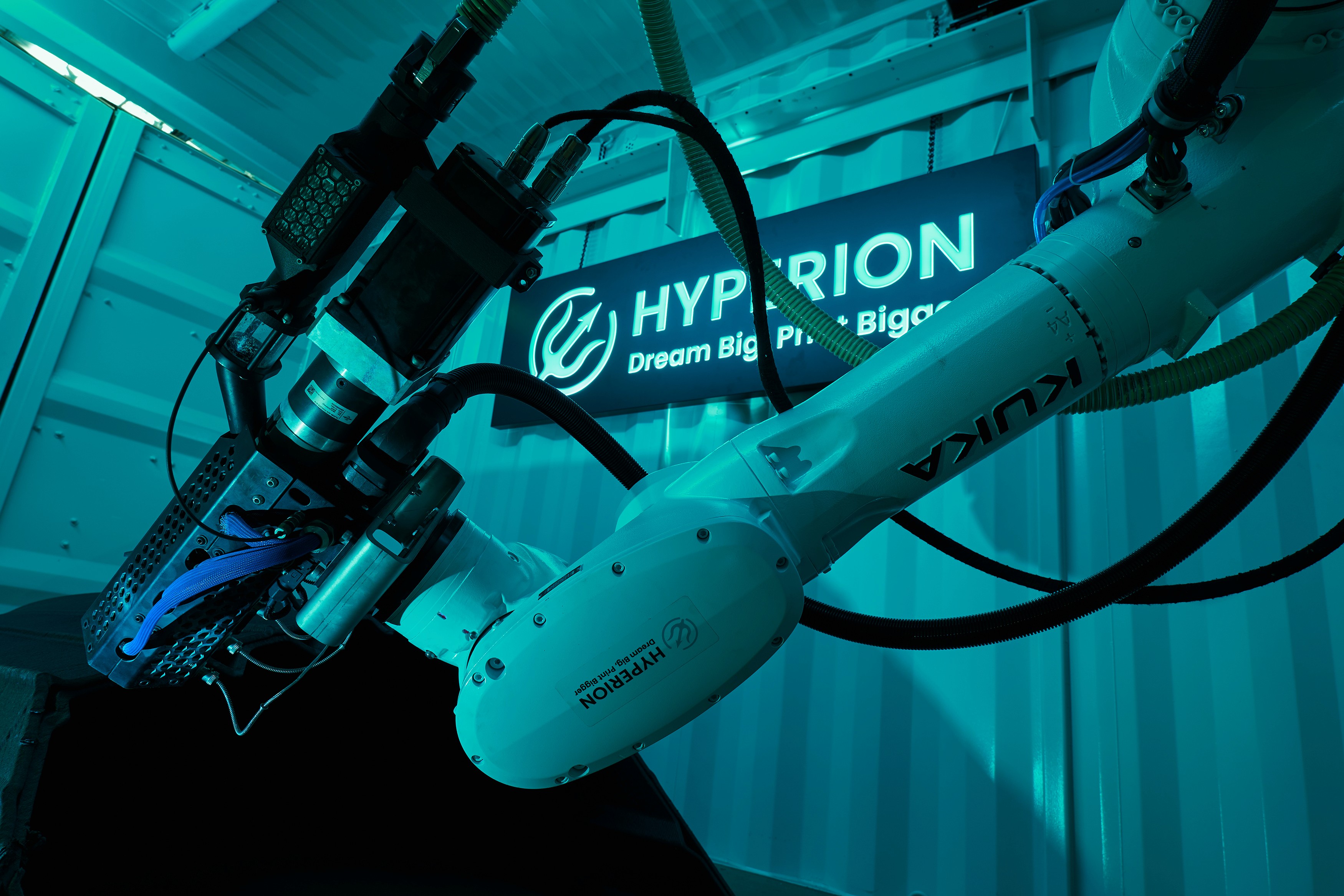
TitanCell containerised units designed for rapid deployment, remote manufacturing, and short-notice response.
Containerised infrastructure
Self-contained power and operational systems qualified for harsh environments including offshore, desert, and remote sites.
Remote monitoring and support
Field-ready systems that operate in operational environments, not just controlled factory floors.
Rapid setup and commissioning
Systems designed for operational environments, not research labs. Validated materials, qualified processes, and production-ready infrastructure.
DEPLOYMENT MODEL
Managed deployment model
Hyperion provides deployable manufacturing capability as a managed service. Customers access TitanCell through a fixed monthly model.
TitanCell is not just equipment access. Hyperion supports design, materials, programming, deployment, and ongoing technical support so customers can access manufacturing capability without building the full capability stack themselves.
Fixed monthy access
Predictable cost model with monthly access to production capability, not equipment purchase or long-term capital commitment.
Full support stack
application design, material selection, robotic programming, deployment to site, and ongoing technical support included.
Production capability without building the stack
Access manufacturing capability without internal expertise in robotics, materials science, or additive manufacturing processes.
System ready to produce what you need
Hyperion handles configuration, testing, and validation so the deployed system is operational and producing your parts.
Materials
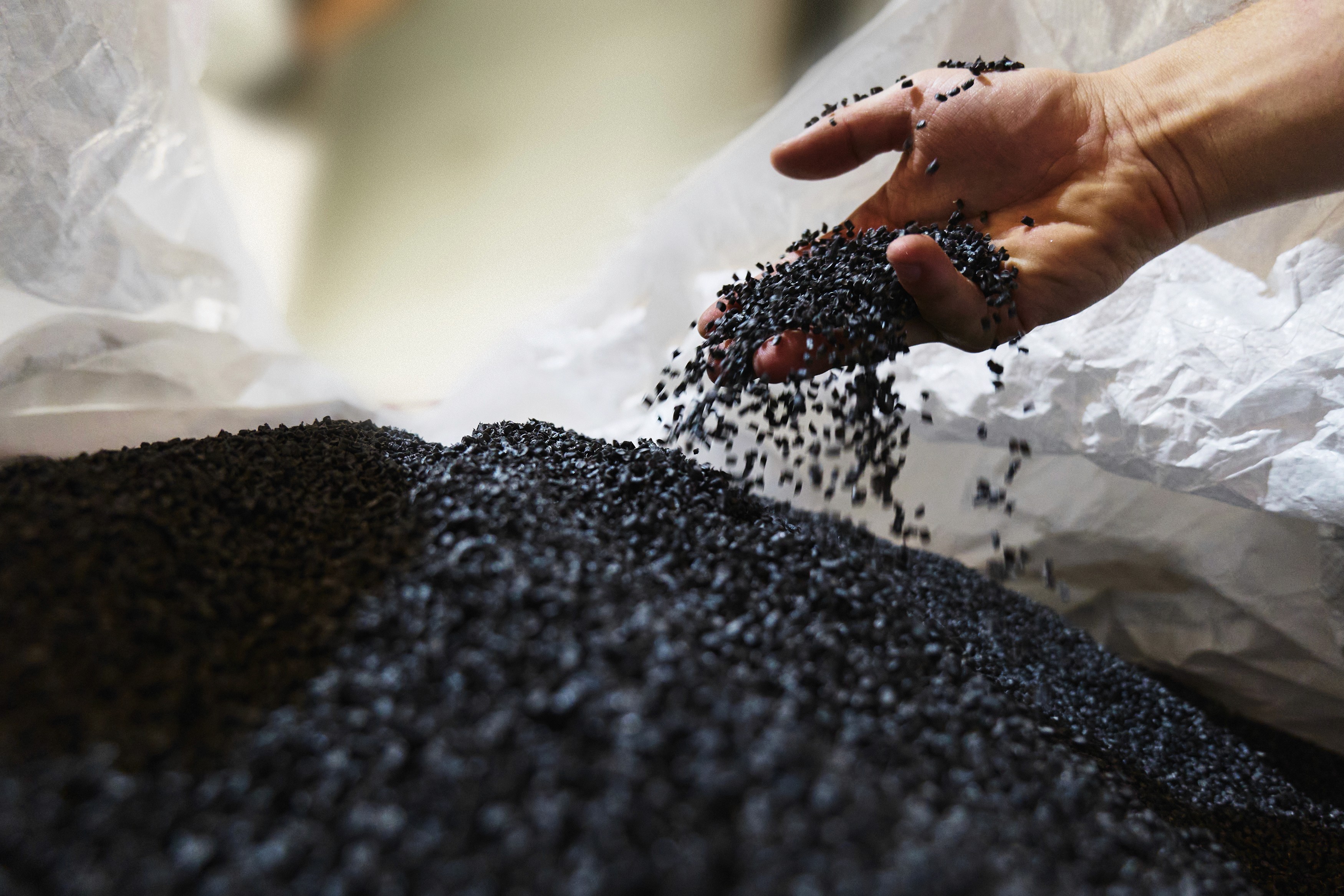
Hyperion works with a wide range of polymers, composites, and metals selected for demanding production environments. Supported by in-house compounding and testing, that capability helps customers match material performance to application, operating conditions, and end-use requirements.