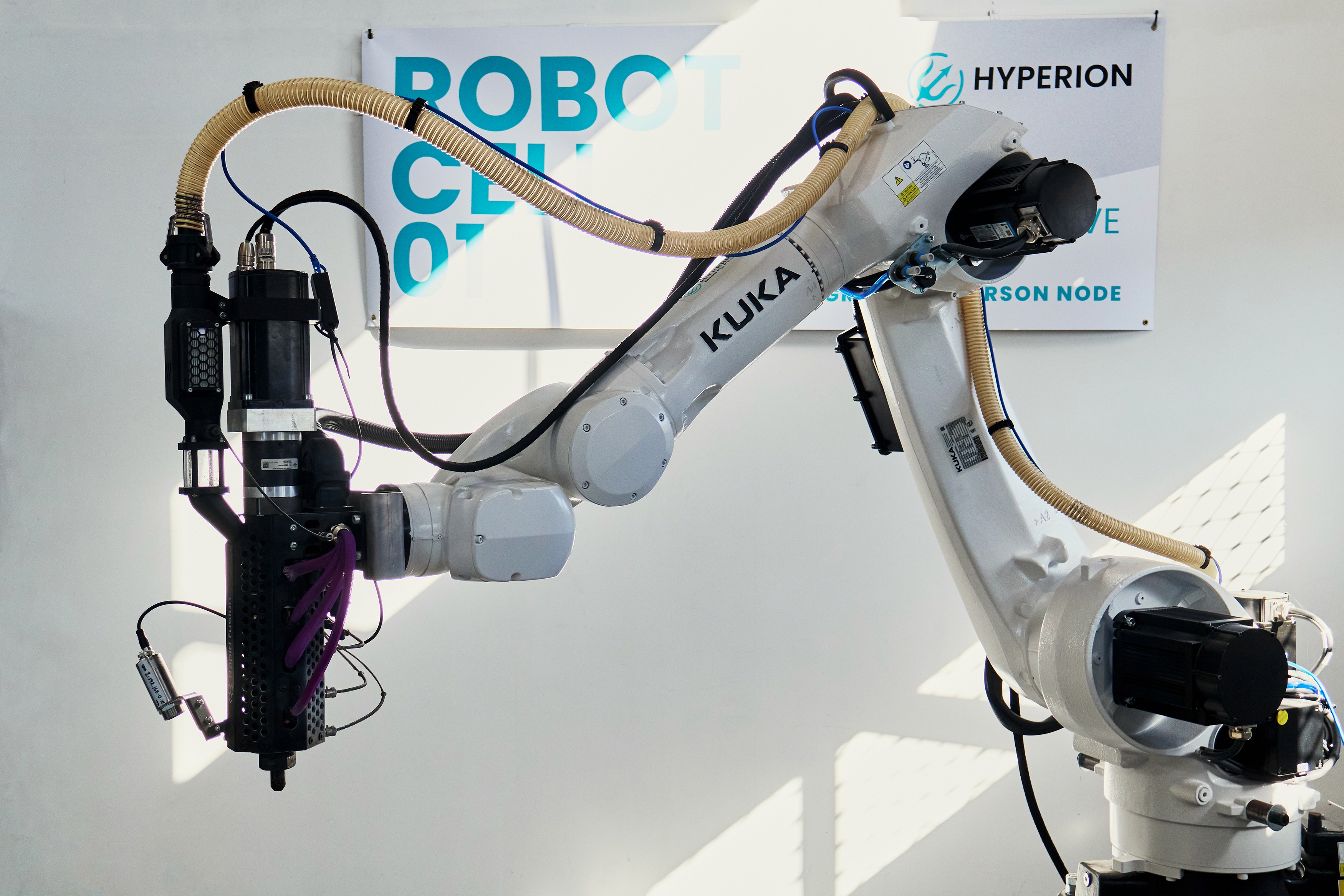
Multi-axis robotic extrusion capability supporting faster regional access, scalable production capacity, and large-format builds.


FREQUENTLY ASKED QUESTIONS
Common questions about configuring robotic production around your parts, processes and facility.
Q1.
When should I consider a custom robotic cell?
A custom cell is worth considering when your part dimensions, production process or facility requirements call for a tailored configuration. It allows the system to be developed around a defined manufacturing task, from research and prototyping to tooling and production.
Q2.
What can be customised within the cell?
Configuration can include the robot, extrusion equipment, build area, part positioning, software and cell layout. The combination depends on your materials, component geometry, production targets and available space.
Q3.
What does multi-axis robotic printing enable?
Multi-axis motion gives greater control over the position and orientation of the extrusion tool relative to the part. This can support deposition paths and geometries that are difficult to achieve with conventional three-axis printing, depending on tool access and process requirements.
Q4.
Can a cell be configured for research and materials development?
Yes. Custom cells can support materials trials, process development and experimental toolpaths. Defining the intended research activities early helps establish the required equipment, software access and flexibility.
Q5.
What site requirements should be considered?
Consider the complete operating area, including equipment access, material handling, guarding and maintenance. Power, ventilation and other services depend on the selected process. These requirements should be established alongside the cell layout.
Q6.
What information does Hyperion need to scope a custom cell?
Start with what you want to produce: typical parts, dimensions, materials and expected output. Share your facility layout, existing equipment and any research or production requirements to help define the configuration and integration scope.