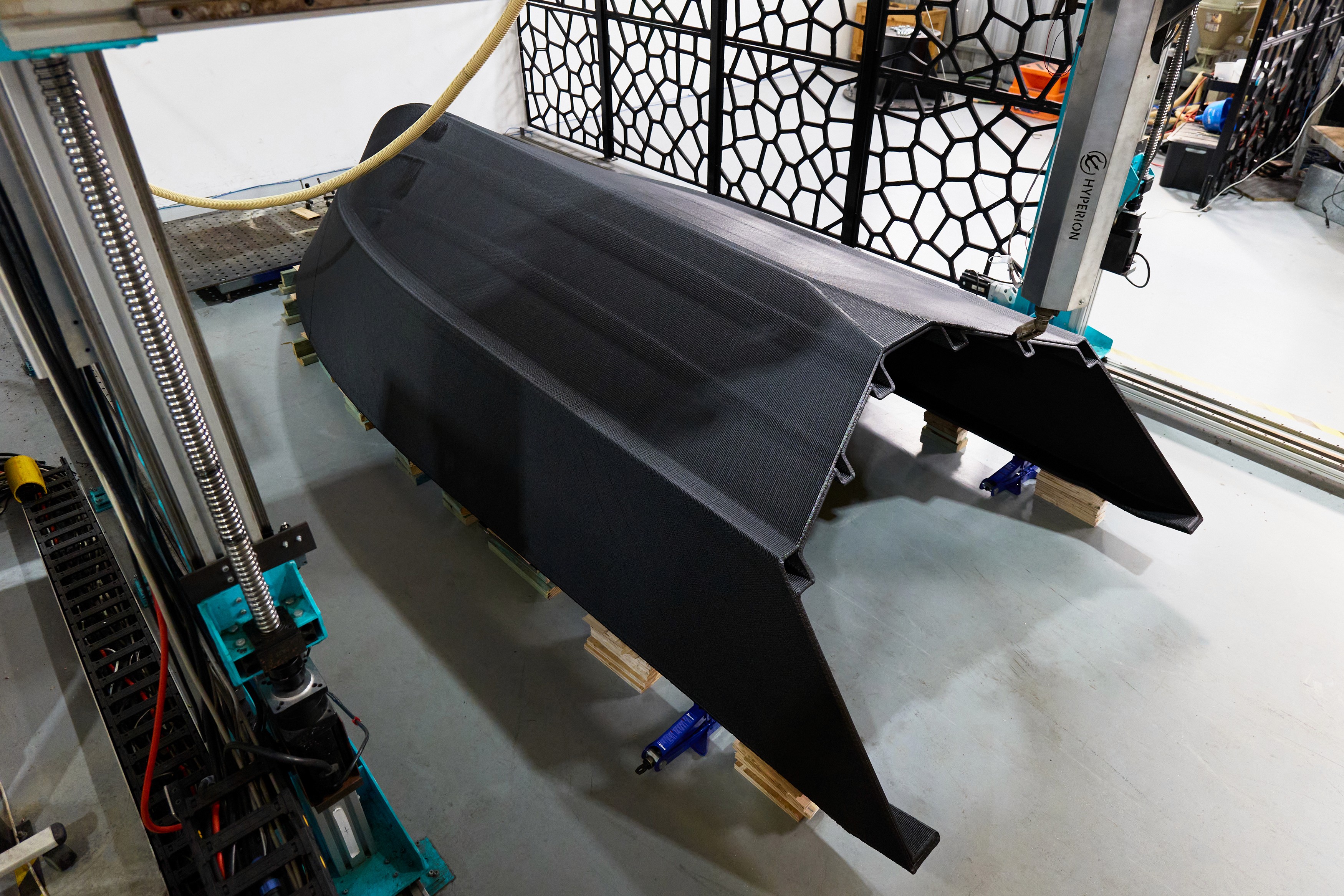
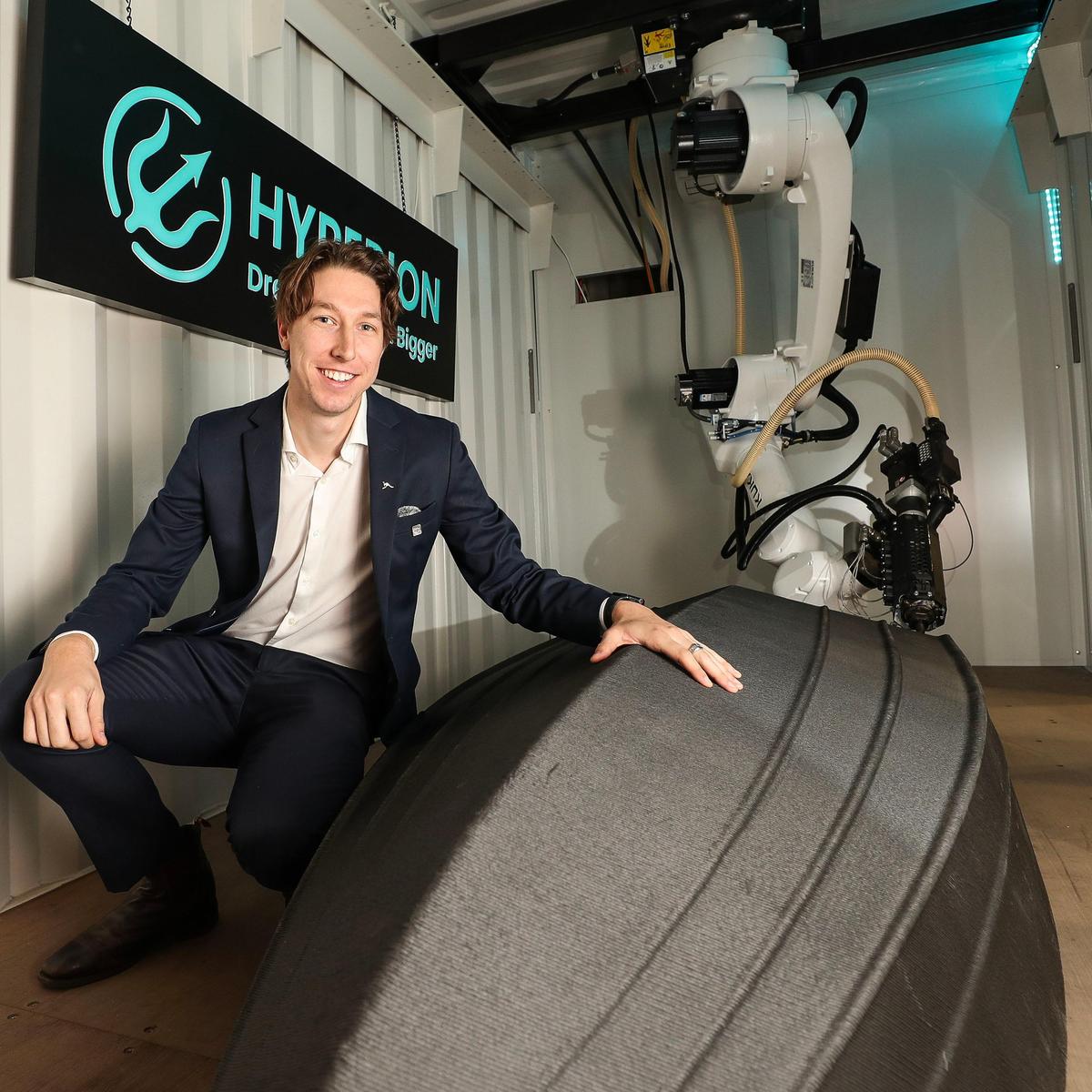
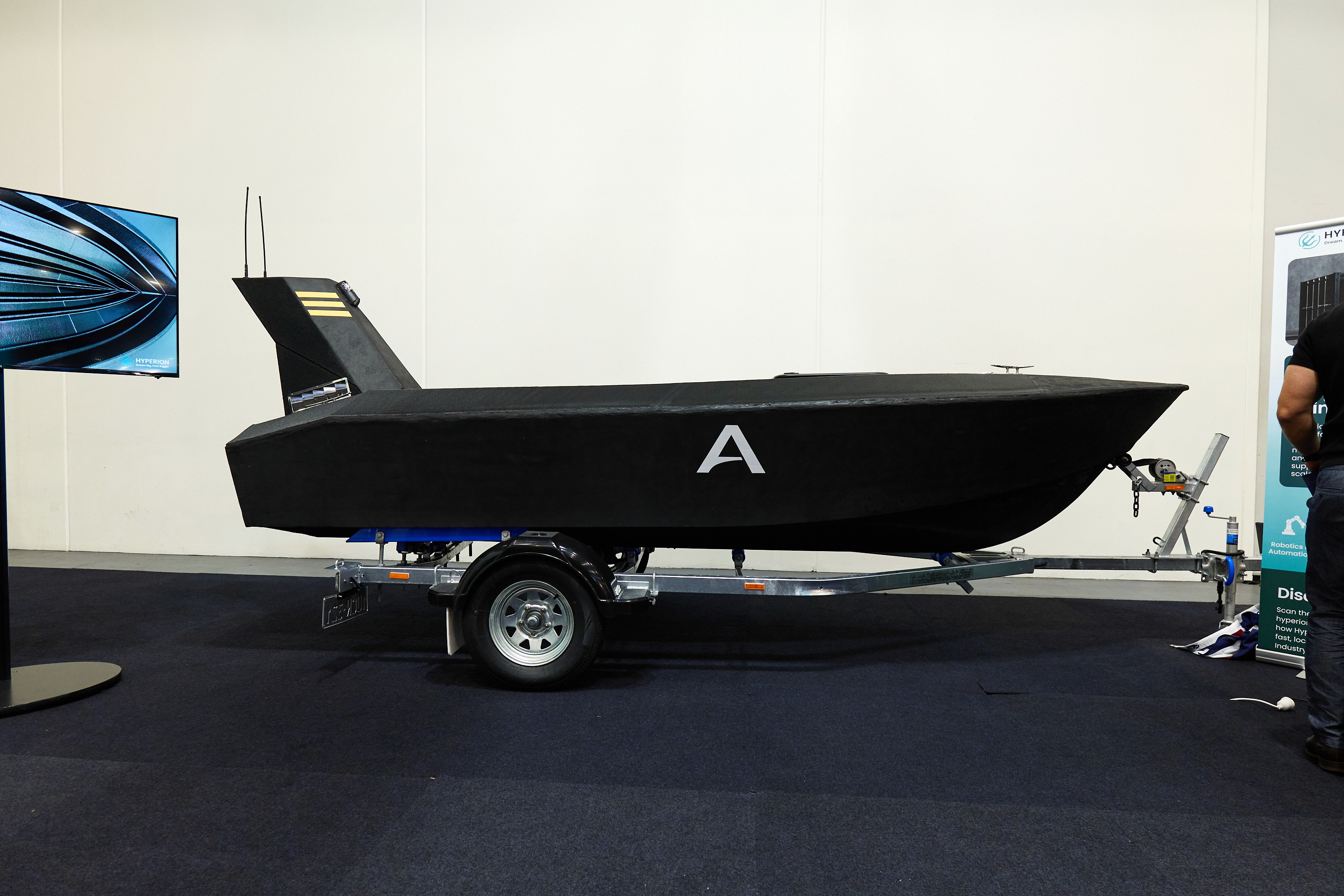
Western Australia's defence manufacturing capability reached a new milestone this week, with WA Defence Minister Paul Papalia officially unveiling the ASTRA 460 at the Indian Ocean Defence and Security (IODS) conference, the southern hemisphere's first 3D-printed Uncrewed Surface Vessel.
The reveal, which saw the vessel uncovered in front of assembled defence and industry delegates, also marked the first public viewing of Hyperion's deployable TitanCell manufacturing unit.
The ASTRA 460
The ASTRA 460 is a 4.6-metre autonomous surface vessel, the first platform in the Blackfin autonomous vessel family, a scalable range of USVs spanning multiple sizes, propulsion systems, and mission configurations. The hull is designed by WA marine architect Versatile Marine, manufactured by Hyperion Systems using Large Format Additive Manufacturing (LFAM), and equipped with Greenroom Robotics' GAMA autonomy and AI software platform.
Printed from recycled polymer waste sourced within Australia, the hull is designed for modular payload integration across a range of maritime mission profiles, including ISR, border protection, surveillance, and force protection.
Manufacturing at Speed
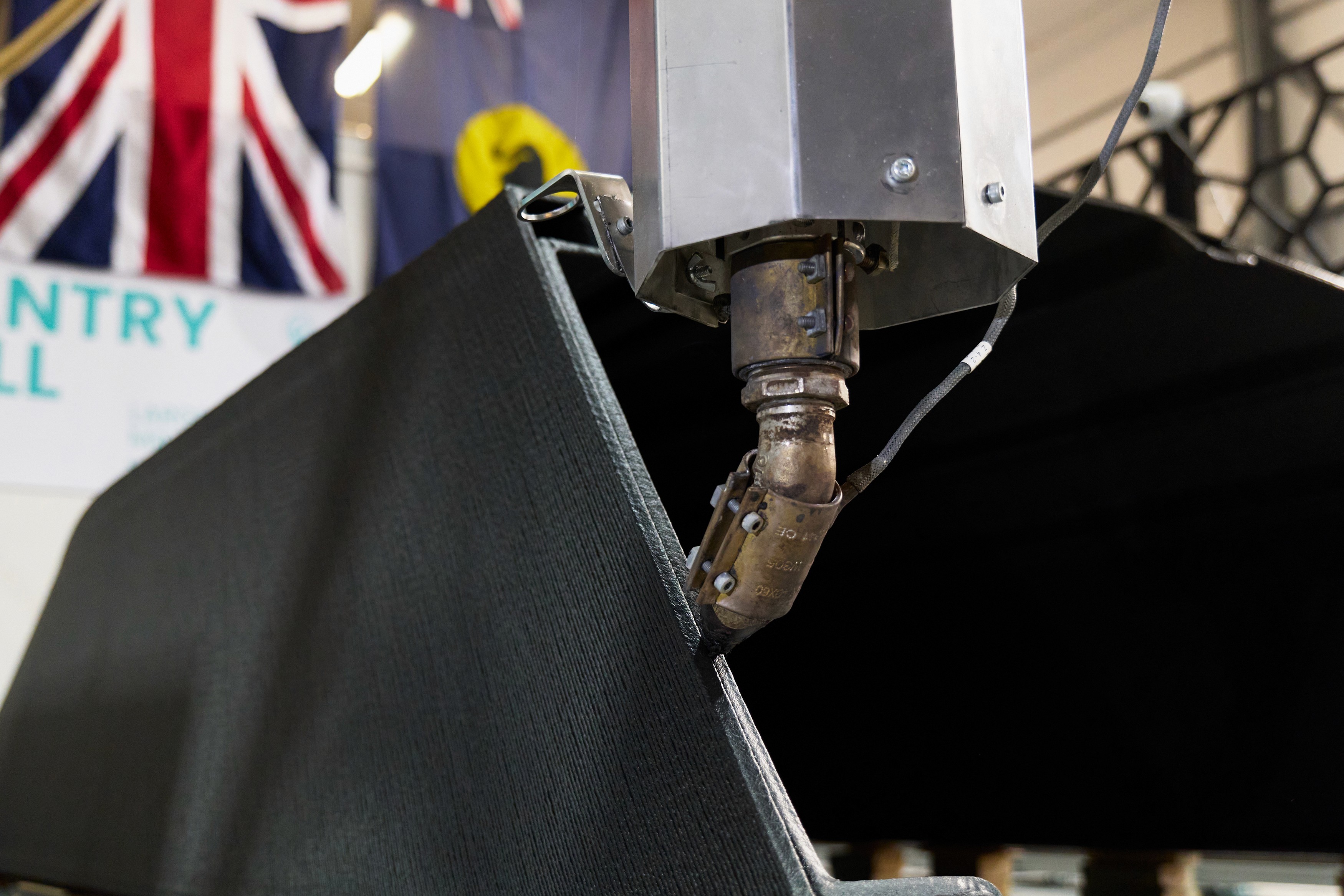
The ASTRA 460 hull was printed in 40 hours — compared to a minimum of four to six weeks using conventional boat-building methods.
Hyperion CEO Josh Wigley said the production advantage goes well beyond a single vessel:
"This dramatic reduction in production time highlights the transformative potential of additive manufacturing for rapid maritime capability and sovereign industrial resilience."
Autonomy and Mission Capability
The vessel's autonomous navigation and control systems are delivered by Greenroom Robotics' GAMA platform, a proven, scalable solution designed to operate across varying USV configurations.
Greenroom Robotics co-founder and COO Harry Hubbert said the combination of rapid manufacturing and modular autonomy creates a significant operational advantage:
"In contested environments, the ability to quickly adapt a vessel to meet evolving mission requirements delivers a significant asymmetric advantage. Hyperion's 3D-printed USVs can deliver almost real-time customisation to suit the specific operating context."
"In a matter of days, a vessel can be printed, autonomy enabled and on the water. This opens up endless possibilities for rapid, scalable and distributed maritime defence."
Subject to sea trials the ASTRA 460 is designed to achieve a top speed of approximately 40 knots, a cruising speed of 20–30 knots, and a range of 180–200 kilometres, with modular payload flexibility across mission roles. The choice depends on your application.
The ASTRA 460 is among the first LFAM 3D-printed USVs in the world.