What happens to subsea infrastructure when it reaches the end of its working life?
At Hyperion, we’re working to turn it into the raw material for what gets built next.
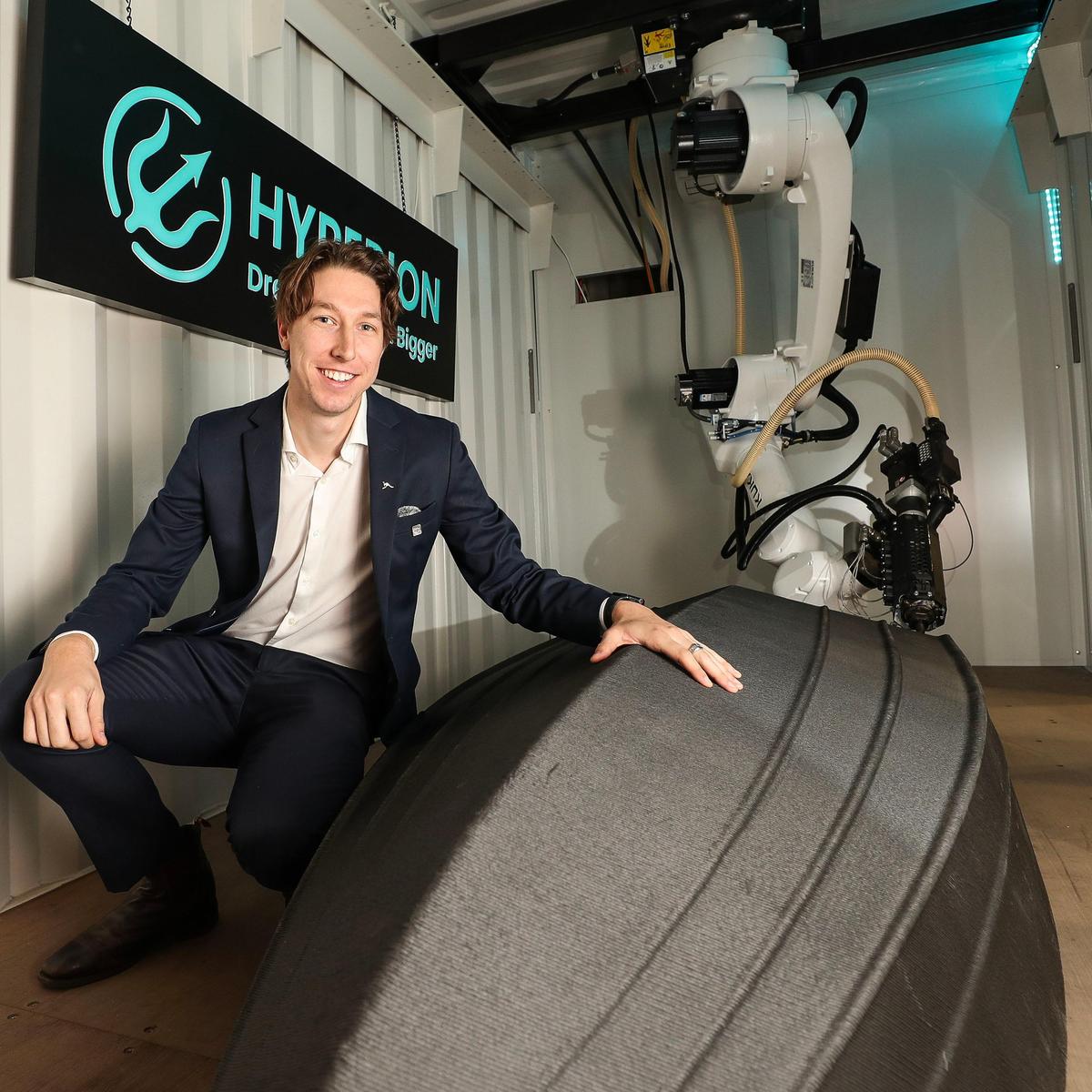
In collaboration with Woodside Energy and The University of Western Australia, Hyperion is transforming recovered HDPE from decommissioned subsea umbilicals into feedstock for large-format additive manufacturing.
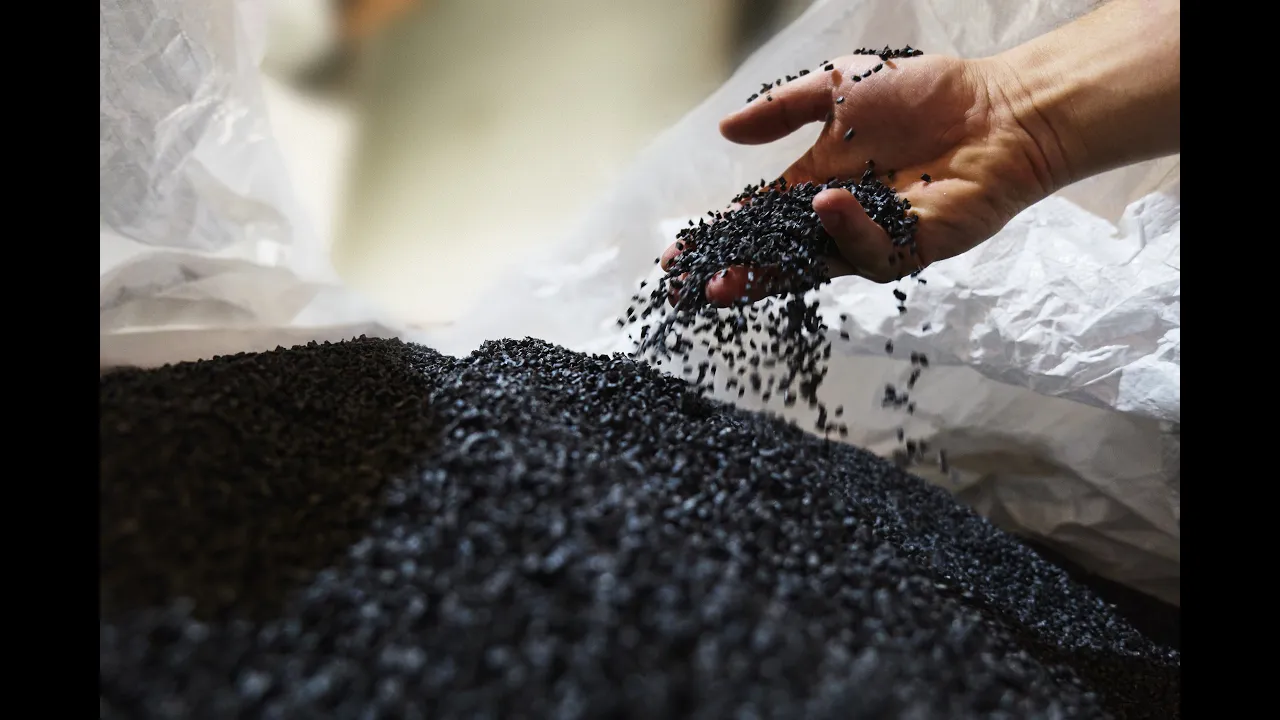
The process takes a material once destined for disposal and puts it back into production. Recovered umbilical HDPE supplied by Woodside is shredded into flake at Hyperion, compounded with selected additives and fillers, and converted into a pelletised feedstock engineered to run through our large-format additive manufacturing systems in Henderson. The University of Western Australia is providing research support to help develop and validate the material.
And it isn’t stopping at material trials.
The recovered polymer is already being used to manufacture real, large-scale products — including boats.
That matters because Australia faces a broader challenge around sovereign access to polymer feedstocks. Following the cessation of domestic polyethylene resin production, Australian manufacturers have become increasingly reliant on imported virgin polyethylene.
Meanwhile, significant quantities of high-value polymer already exist within Australia’s industrial supply chains.
Decommissioned subsea infrastructure represents an opportunity to recover some of that material, process it locally and turn it back into useful products — rather than treating it simply as waste.
For Hyperion, the opportunity is bigger than recycling.
It’s about building a circular, sovereign manufacturing capability where industrial polymers can be recovered, reformulated and rapidly transformed into new large-scale products using advanced manufacturing.
The next phase of the collaboration is now being scoped, with the aim of expanding recovery beyond PE and PP into a broader range of polymers found in subsea infrastructure, while developing new applications for these materials.
Recovered offshore. Reprocessed in Australia. Manufactured into what comes next.