Metal 3D Printing
What We Deliver
Wire & Arc Additive Manufacturing (WAAM) is more than a 3D printing technology; it is a transformative alternative to traditional metal casting, enabling large-scale metal fabrication with speed and precision.
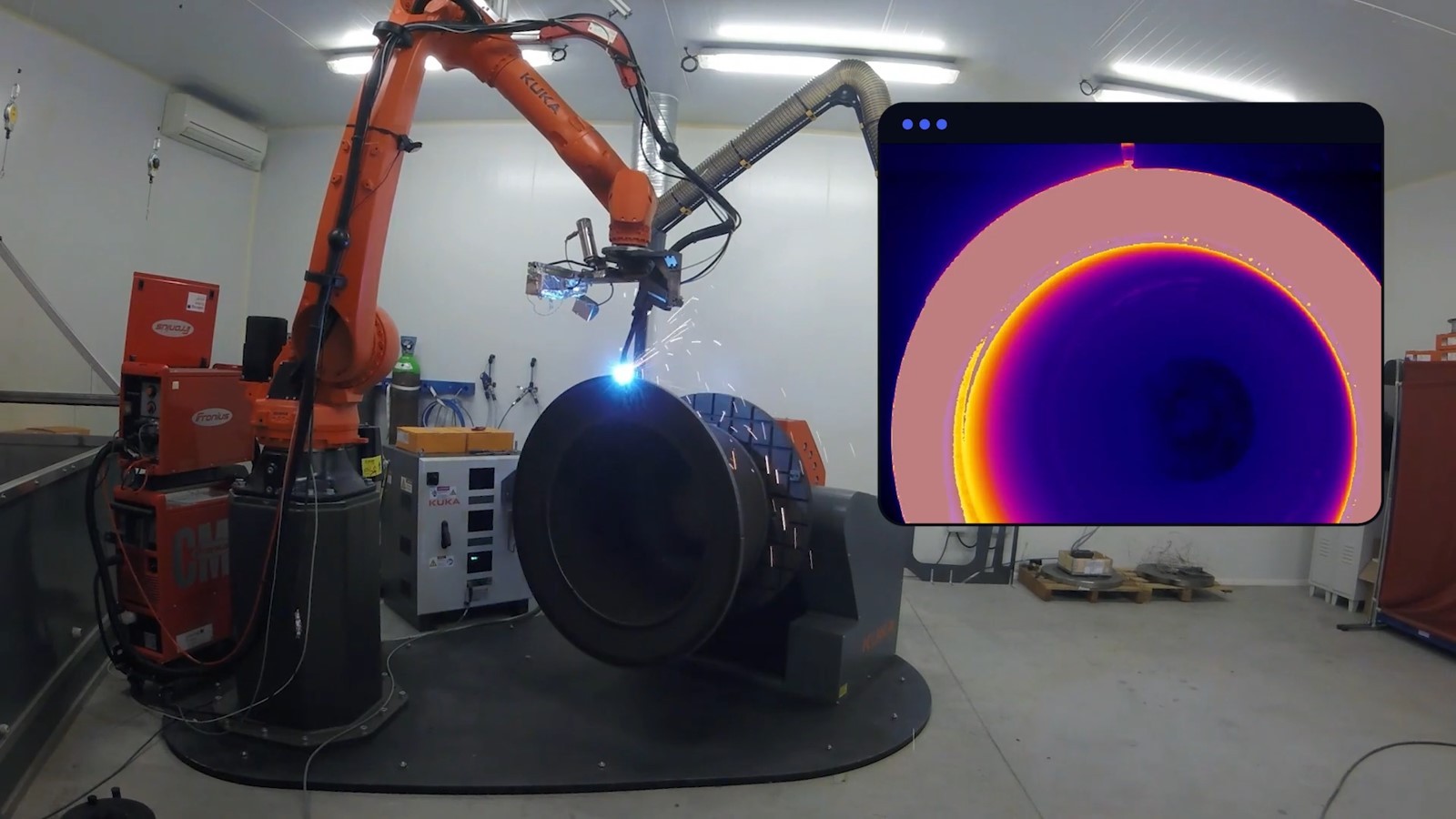

Wire & Arc Additive Manufacturing
WAAM leverages advanced robotic welding to 3D print robust metal components. This metal fabrication technology benefits industrial manufacturers servicing marine and shipbuilding to defence and mining sectors, elevating productivity by delivering large, structural metal parts at high deposition rates with consistent quality.
A trusted metal 3D printing process within the additive manufacturing family, WAAM works by depositing successive layers of metal until a near-finished component is formed, ready for light machining and is the perfect complement to Hyperion’s existing plastic LFAM capabilities.
Metal 3D Printing Materials
Hyperion’s WAAM capability utilises a range of industrially proven metals to suit demanding environments, delivering parts with high structural integrity and clean internal microstructures
Stainless Steels
Stainless steels are ideal for marine, oil & gas, defence and mining applications. 3D printed stainless steel parts deliver higher durability, better corrosion resistance and precise weldability, making them well-suited to printing large structural components such as pump housings, valve bodies and pressure components.
Aluminium
Aluminium offers excellent weldability, corrosion resistance and reduced part weight, making it a strong choice for large, lightweight structures and assemblies. Aluminium 3D printing is particularly valuable in marine and industrial applications where reduced mass and reliable performance are key.
Inconel (Nickel-Based Superallows)
Inconel alloys provide high strength, exceptional resistance to cracking and broad temperature capability. These properties make Inconel WAAM ideal for high-temperature, high-pressure and highly corrosive industrial environments, especially where lower-grade stainless steels are at risk of degradation.
Super Duplex Stainless Steels
Super duplex stainless steels combine elevated mechanical strength with superior corrosion resistance. These materials are commonly deployed in critical service environments including offshore oil & gas and marine infrastructure, where both durability and corrosion performance are essential.
Benefits
Benefits of WAAM Technology
(001)


Systems
Container cells, cobot cells, extruders, and fully customised robotic builds for flexible production.
Digital Repeatability
Where no CAD model or tooling exists for the part being replicated, Hyperion is able to scan and capture geometry to create an accurate 3D digital file. This becomes the repeatable manufacturing tool, enabling reliable reproduction of critical components without having to maintain physical moulds.
(002)
Systems
Container cells, cobot cells, extruders, and fully customised robotic builds for flexible production.
Direct Replacement of Casting
WAAM is positioned as a direct replacement for previous casting technology. Instead of making a mould and machining a part, with metal additive manufacturing, parts can be printed on demand, without the constraints of ageing or lost physical tooling.
(003)
Systems
Container cells, cobot cells, extruders, and fully customised robotic builds for flexible production.
Strong Material Properties
3D metal additive manufacturing offers stronger, more reliable cast parts due to the cleanliness and density of the materials used.
(004)
Systems
Container cells, cobot cells, extruders, and fully customised robotic builds for flexible production.
Cost Savings
WAAM eliminates the need for costly casting moulds and patterns, reduces machining time, accelerates delivery and enables repeat production from digital files.
(005)
Systems
Container cells, cobot cells, extruders, and fully customised robotic builds for flexible production.
Waste Reduction
Unlike traditional casting, which creates waste through gating, risers and excess material, WAAM builds parts layer by layer using nothing more than the material required. Final machining focuses only on finessing the critical structure, minimising scrap and maximising material utilisation.
WA-First Capability
At Hyperion, we’re proud to be delivering the first industrial WAAM metal 3D printing capability in Perth, Western Australia. With casting no longer available in WA, WAAM alleviates local manufacturers’ and end users’ dependence on foreign supply, eliminating associated lead times and freight costs. WAAM empowers local production of critical components, strengthening supply security and advancing sovereign metal additive manufacturing capabilities.
WAAM Applications & Industries
WAAM is primarily used by manufacturers to produce large metal components historically made via casting or extensive machining. The 3D printing method enables on-demand fabrication, critical for fast moving industrial applications where large parts, tough alloys and long lead times are common.